Joint pain relief for today’s modern world
In a world full of quick fixes, finding something that aligns with nature’s simplicity and effectiveness can be challenging, especially when it comes to pain.
With more and more people experiencing joint pain, looking for a natural joint pain solution has become one of the big health challenges of our time.
Today the most popular option is to mask the problem—typically with medication—rather than address what might be causing the pain in the first place.
But is this approach of “masking the pain” truly bringing relief, or could it be quietly adding to the problem?
In this article, we’ll look at three often-overlooked factors behind joint pain—injury and misuse, chronic dehydration, and nutritional deficiencies—and how a natural mineral called boron, or more to the point fructoborates may help support healthier joints.
Why the approach matters
Like all problems, how you approach joint pain strongly influences the outcome. Your intention, that is whether you’re seeking a quick fix or genuine healing matters.
Pain, like all ailments, doesn’t show up by chance, and it doesn’t knock on just anybody’s door without reason.
There is always a reason pain is visiting.
The “how” and “when” of that intrusion can be complex and not always obvious in daily life. Yet, for many people with joint pain, a few key factors show up again and again.
Three of the biggest are:
- Damage caused by injury or misuse
- Chronic dehydration
- Nutritional deficiencies
Let’s look at each of these more closely.
1. Injury, misuse and structural damage
Damage caused by accidents and overuse and the associated pain, whether short‑term or long‑term is the most obvious cause.
Falling down the stairs, a car crash, a skiing accident, getting hit, or breaking a bone etc. can all affect joints, cartilage, and surrounding tissues. Repetitive strain and poor movement patterns can also create wear and tear over time.
In these cases, joint pain often reflects genuine structural stress or damage. While pain relief may be helpful, real progress usually requires supporting healing: rest, proper rehabilitation, strengthening, and sometimes medical intervention.
2. Chronic dehydration: an overlooked stress on joints
Chronic dehydration is so widely misunderstood that its true destructive power has been blamed on many different ailments. The unnecessary suffering it can contribute to is, frankly, remarkable.
Your joints depend on well‑hydrated tissues and healthy synovial fluid to move smoothly. If your body is consistently under‑hydrated, your joints may feel stiffer, less cushioned, and more easily irritated.
It’s not just how much water you drink; it’s how much water your body actually absorbs at the cellular level.
Factors like the pH (Power of Hydrogen) and ORP (Oxidation Reduction Potential) of the water you consume may influence how effectively your body uses that water and manages oxidative stress.
When hydration and cellular balance are off, the opportunity for discomfort, inflammation, and degeneration to take hold and move in increases.
Hydrating your body with water that can more efficiently be absorbed (good pH, silica and hydrogen ion content—watermelon juice is a good naturally available example), is a simple but often overlooked part of natural joint support.
3. Nutritional deficiencies and bone–joint health
Nutritional deficiencies are another major piece of the joint‑pain puzzle.
When you think about joint pain, you must also consider:
- The health and density of the bones
- The strength and flexibility of the surrounding tissues (cartilage, ligaments, tendons)
Your bones are also where your body’s biggest mineral reserves are stored. If there are ongoing gaps in mineral intake and utilisation, joint function can suffer over time.
Where bone health is concerned, most people would think calcium. But calcium is one part of an intricate network. And part of this network is a trace mineral that’s gaining increased attention (apart from calcium and magnesium) for bone and joint health, and that is boron.
Joint pain relief–the quiet power of boron
Boron is a small, often overlooked mineral with surprisingly broad potential benefits.
Early research suggests boron may:
- Help your body make better use of calcium and magnesium, two essentials for strong, resilient bones and connective tissue
- Support healthy mineral balance, which is vital for bone density and joint integrity
- Help calm low‑grade inflammation and ease everyday joint discomfort, potentially helping you move more comfortably
- Play a supportive role in brain function, including attention and memory, helping you stay sharp and focused
- Influence certain hormone‑related processes, including vitamin D and estrogen activity, which are both important for long‑term bone and joint health
From research done and still ongoing, boron is increasingly viewed as a targeted way to support bones, joints, brain, and overall vitality—especially where modern diets may not provide optimal levels.
A targeted boron approach: transdermal joint support
One way to focus boron’s potential benefits on the areas that need it most is through topical (transdermal) application.
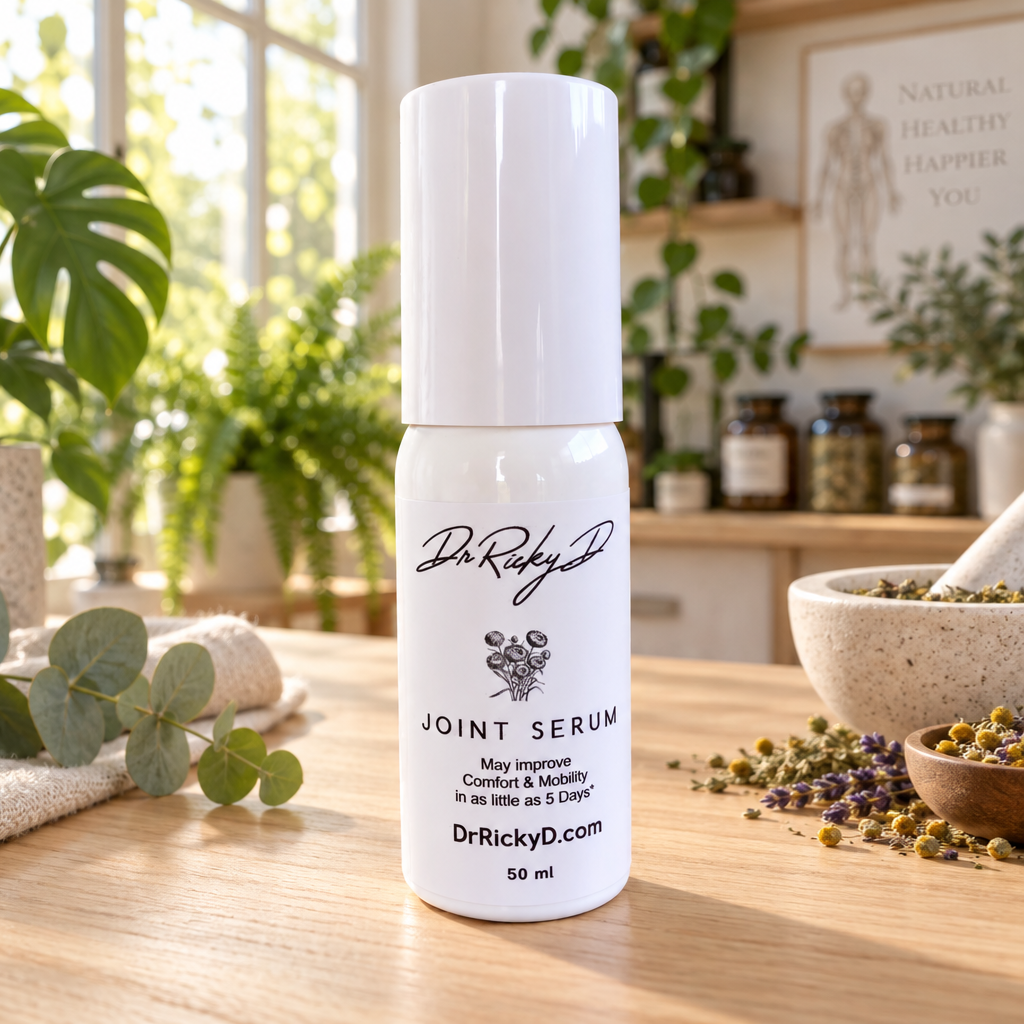
Using naturally derived boron from Borage (in the form of fructoborate), discover the next level of natural joint care with the advanced formulation of Dr Ricky D Joint Serum.
Each application of Dr Ricky D Joint Serum can deliver 3 mg of fructoborate rich serum directly to the skin, designed for targeted support right where you feel it most. Boron is being researched for its potential to:
- Support healthy joint function and everyday comfort
- Help the body use calcium and magnesium—key minerals for strong bones and connective tissues
- Assist in calming low‑grade, day‑to‑day inflammation that can affect mobility
By delivering fructoborates through the skin, this serum focuses care on specific problem areas, making it an ideal addition to your daily joint‑support routine.
Many people choose to apply it to:
- Necks
- Knees
- Hands and fingers
- Hips
- Ankles
- Basically any overworked or stiff joints
As part of a daily routine aimed at maintaining flexibility, comfort and an active lifestyle—without wholly relying on pills to mask the issues, freedom from pain can be experienced.
Note: Boron’s (fructoborates) benefits are based on emerging research, and its effects in topical form are still being studied. This information is for educational purposes only and is not a substitute for professional medical advice. Always speak with a healthcare provider, especially if you are pregnant, breastfeeding, have kidney issues, or are taking medication.
FAQ: Frequently Asked Questions
Q1. Can dehydration really cause joint pain?
Mild dehydration won’t usually “cause” joint pain on its own, but chronic, low‑level dehydration can make things worse. Your joints need fluid and well‑hydrated tissues to move smoothly. When the body is under‑hydrated, joints can feel stiffer and more sensitive. Improving both how much and how well you hydrate is a simple way to support more comfortable joints.
Q2. What exactly is boron, and how might it help my joints?
Boron is a trace mineral found in soil and certain foods like nuts, fruits and leafy vegetables. Early studies suggest it may help the body use calcium and magnesium more effectively, support bone strength and influence the way your body handles inflammation. Because of this, some people use boron as part of a natural joint‑support plan, especially as they get older.
Q3. What is the difference between boron and fructoborates?
Boron is a basic trace mineral (a chemical element) that can be supplied in different forms, such as boric acid, sodium borate, or organic boron compounds.
Fructoborates are one of those organic forms: they are complexes where boron is naturally bound to fructose (a sugar), similar to how it occurs in some plants. This binding can change how boron is absorbed, transported, and tolerated in the body.
In simple terms, “boron” is the mineral itself, while “fructoborates” are a specific, plant‑like form of boron that may offer different bioavailability and potential benefits compared with more basic inorganic boron salts.
Q4. Can I stop my pain medication if I start using natural methods like Dr Ricky D Joint Serum?
That’s a decision to make with your doctor, not alone. Natural approaches (better hydration, improved nutrition, gentle movement and boron) may help support joint comfort, but they don’t replace medical advice. If you want to reduce or change your pain medication, always discuss it with your healthcare provider first.
Q5. How long does Dr Ricky D Joint Serum usually take to work?
Everyone is different. Some people notice changes in comfort or flexibility within days or weeks; for others it can take longer, especially if joints have been under stress for many years. Natural approaches work best as part of a daily routine—good hydration, sensible movement, nutrient‑rich food, and consistent use of any joint‑support products you choose.

Disclaimer: All information on this web site is for informational purposes only. Under no circumstance is any product on this site intended to diagnose, treat, cure or prevent any disease or condition. Please contact a medical doctor to diagnose and treat medical conditions.